
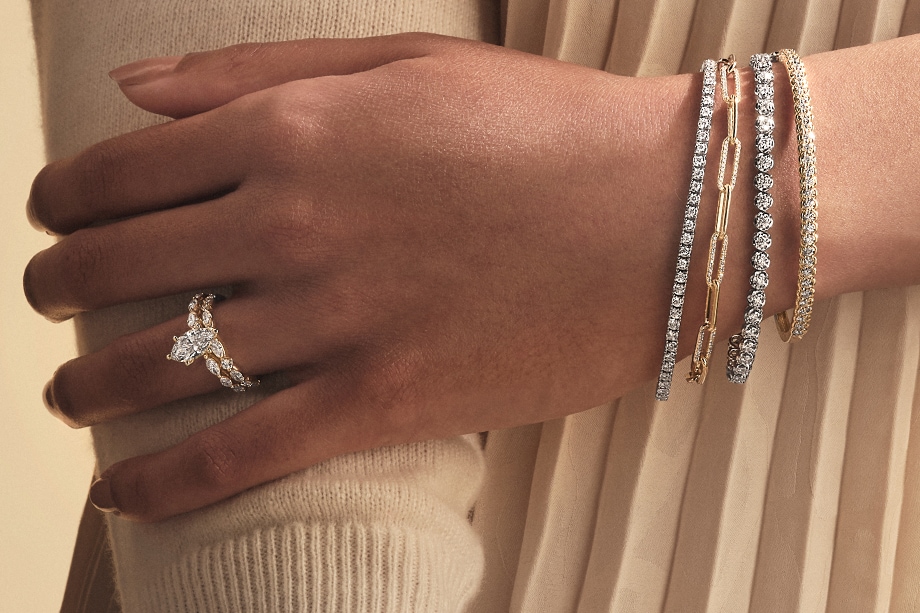
Solitaire Ring
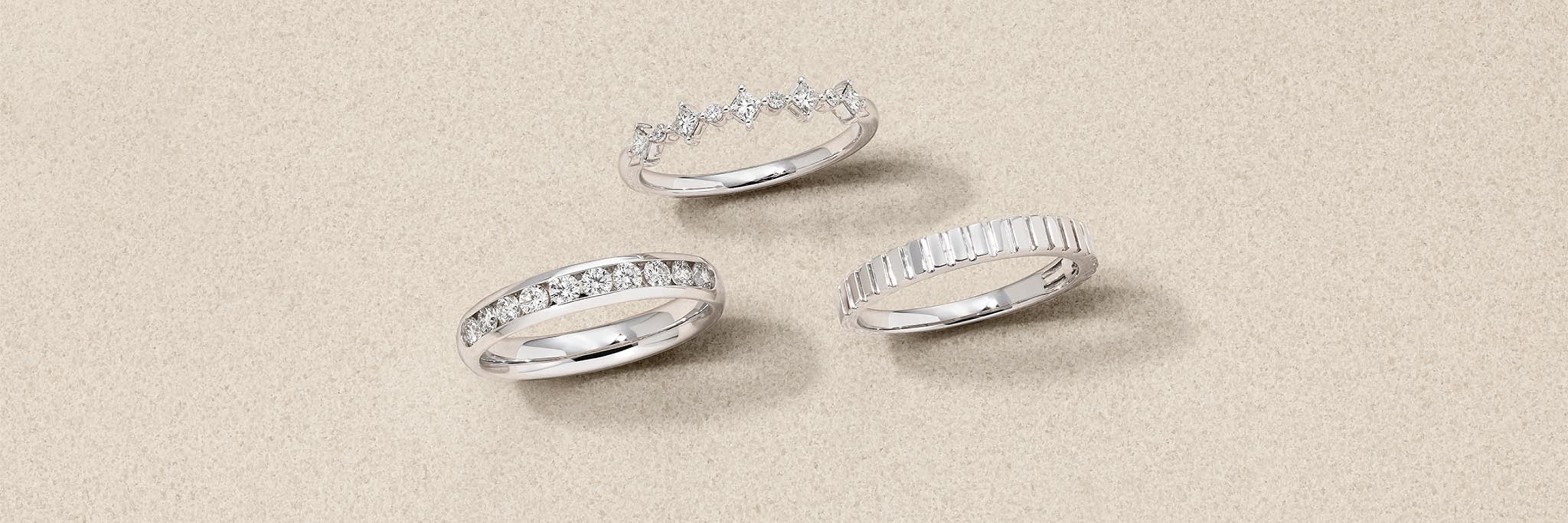
Straight or thin diamond band
Halo Ring
Curved or contoured band
Three-Stone Ring
Slightly curved matching band
Vintage Ring
Detailed or engraved band
WHY PAIRING MATTERS
Two Rings, Worn Together Every Day
Most people spend a great deal of time choosing an engagement ring and relatively little time thinking about the wedding band that will sit next to it. That tends to show. A band that does not account for the shape, width, or profile of the engagement ring can leave a visible gap, sit at an angle, or simply feel like two unrelated pieces of jewelry worn on the same finger.
The good news is that a successful pairing does not require an exact match. It requires attention to a small number of practical factors: the shape of the band relative to the setting, the width relative to the shank, and the metal relative to what you are already wearing. This guide works through each of those in order.
If you already know your engagement ring style, use the quick reference bar above or skip ahead to the pairing table to find the band types that tend to work best with your specific ring. If you are still deciding, start with the six considerations below.
How to Match a Wedding Band to an Engagement Ring
Six Considerations for a Successful Pairing
01
Match the Metal
The most natural starting point is metal consistency. Yellow gold pairs cleanly with yellow gold. White gold and platinum share a tonal family. Mixing metals is common and can look intentional when the contrast is deliberate rather than accidental.
02
Consider the Shape
Band shape is often more important than color. A straight band works well with raised or prong settings. A curved or contoured band is designed to fit flush around a center stone, eliminating the gap that can make a pairing feel unfinished.
03
Match the Style
A minimal solitaire engagement ring is best paired with a simple band that does not compete for attention. A diamond-set engagement ring can carry a diamond band. Vintage or detailed rings pair naturally with engraved or milgrain-edged bands.
04
Prioritize Fit
The two rings should sit flush against each other with no visible gap. A comfort-fit band, with its slightly domed interior, reduces friction and makes the combined stack more comfortable for all-day wear.
05
Think About Proportion
A wide band can visually overpower a delicate engagement ring. As a general principle, the wedding band should be equal to or slightly narrower than the engagement ring's shank for a balanced result.
06
Consider Stacking
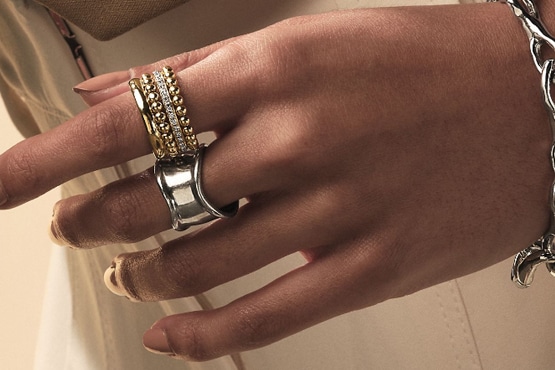
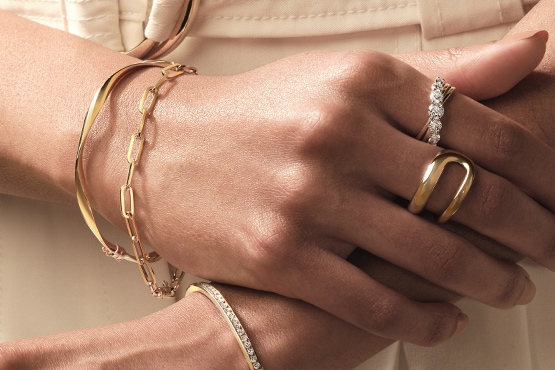
Some people choose to wear two or three bands alongside their engagement ring. Thin bands and minimalist designs stack most successfully. Mixed metals and varied textures can work well when the proportions are consistent.
Wedding Band Pairing by Engagement Ring Type
Matching by Ring Style
The shape and style of your engagement ring is the most reliable guide to choosing a compatible wedding band. Below are the most common engagement ring types and the bands that tend to work best with each.
| Solitaire | A clean center stone with a simple prong or bezel setting. The most versatile engagement ring style. | Straight band Thin diamond band Plain metal band |
| Halo | A center stone surrounded by a frame of smaller diamonds. The halo extends the ring's footprint. |
Curved band Contoured band Pave diamond band |
Three-Stone |
Three stones set in a row, often with a tapered shank. The side stones add width to the profile. |
Slightly curved band Matching metal band Simple straight band |
Vintage / Detailed |
Rings with engraving, milgrain, filigree, or other ornamental detail. Style consistency matters most. |
Engraved band Milgrain band Custom contoured band |
Wedding Band Combinations and Stacking
Wearing Multiple Bands Together
Wedding band combinations refer to wearing multiple bands alongside an engagement ring. Common arrangements include an engagement ring with one wedding band, an engagement ring with two stacked bands, or a mixed metal stack that uses contrasting tones for visual interest.
Stacking works best with thin bands and minimalist designs. When bands are too wide or too ornate, the stack can become visually crowded and uncomfortable to wear. Consistent proportions across the stack, whether all bands are the same width or deliberately graduated, tend to produce the most cohesive result.
Mixed metal stacks are increasingly popular. The key is intentionality: a yellow gold band alongside a white gold or platinum engagement ring can look refined when the contrast is consistent. It looks accidental when the combination appears unconsidered.
Classic Stack
Engagement ring with one matching wedding band. The most common and versatile combination.
Double Band Stack
Engagement ring with two wedding bands, one on each side. Works best with thin, simple bands.
Mixed Metal Stack
Contrasting metal tones worn together. Intentional contrast reads as a design choice rather than a mismatch.
| ATTRIBUTE | GOLD BAND | PLATINUM BAND | DIAMOND BAND | TUNGSTEN BAND |
|---|---|---|---|---|
| Match Quality | High | High | High | Medium |
| Durability | Medium | High | Medium | Very High |
| Maintenance | High | Medium | High | Low |
| Price Range | $$ | $$$ | $$$ | $ |
| Best For | Classic | Premium | Statement | Active |
COMMON PAIRING PROBLEMS
How to Fix the Most Common Issues
PROBLEM
Rings do not sit flush
Use a curved or contoured band shaped to fit around the engagement ring's setting.
PROBLEM
Band overpowers the ring
Choose a thinner or simpler band. The wedding band should complement, not compete.
PROBLEM
Rings feel uncomfortable
Switch to a comfort-fit band. The domed interior reduces friction significantly.
PROBLEM
Consider a custom band made to fit your specific engagement ring's profile and shank width.
Wedding Band Pairing: Common Questions
No, you do not need a specifically coordinated or exactly matched wedding band design. Coordinating styles is more important than matching exactly. Many people intentionally choose contrasting metals or styles. Your goal should be cohesion, not uniformity.
Traditionally the wedding band is placed on the finger first during the ceremony, so it sits closest to the hand. The engagement ring is then worn above it.
Choosing a wedding band with curved or contoured band can help it sit flush with your engagement ring. These styles are shaped to fit around the profile of your engagement ring's setting, without the gap that a straight band would leave.
Yes. Mixed metal stacks are becoming increasingly popular. The key is to be intentional with your ring stack. Two-tone mixed metal combinations work best so the contrast looks like it’s by design.
As a general guideline, the wedding band should be equal to or slightly narrower than the engagement ring's shank. If the band is significantly wider or more ornate, it can pull visual attention away from your engagement ring.
How to Match Your Wedding Band to Your Engagement Ring | Jared